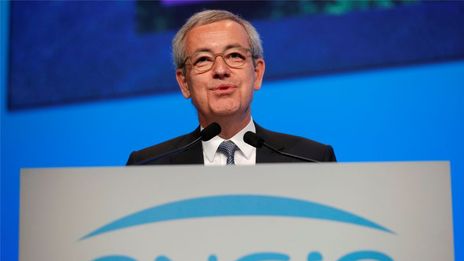
The French energy group acquires the main electricity distributor in southeast England to secure regulated revenues and accelerate its expansion in networks. Jefferies hails "a long-awaited catalyst." Meanwhile, despite slightly declining annual results, Engie is raising its ambitions for 2028.
Engie will acquire British distributor UK Power Networks for £10.5 billion (€12.05 billion). The deal, expected to close by mid-2026, is set to strengthen its position in electricity and boost earnings per share from the very first year. The target company belongs to Hong Kong-based CK Infrastructure Holdings. For Engie, the move is a way to shield itself from the geopolitical shocks shaking energy markets by betting on regulated assets with stable revenues. Distribution networks ensure steady cash flows, while demand is expected to rise with the electrification of transport and industry across Europe.
"Nearly two years ago, we announced our intention to strengthen our presence in electricity networks, particularly distribution networks... today, we are truly making that ambition a reality," emphasized CEO Catherine MacGregor. This acquisition will make the United Kingdom the group's second-largest market by EBIT, behind France. UK Power Networks operates 192,000 km of lines and supplies 8.5 million customers in London and the southeast and east of England.
The research firm Jefferies welcomed the deal, calling it "transformational," involving "a top-tier UK electricity distribution asset" and "acquired at a reasonable and accretive valuation for EPS." "The move in electricity networks was a long-awaited catalyst: this announcement is positive and should significantly enhance the stock's appeal on the market," concluded the analyst covering the case.
Upgraded Short- and Medium-Term Targets
In addition, Engie has raised its financial targets. The group's recurring net income is now expected between €4.6 and €5.2 billion in 2026, up from the previous range of €4.2 to €4.8 billion. The 2026 EBIT excluding nuclear is targeted between €8.7 and €9.7 billion. By 2028, the group forecasts recurring net income of €5.2 to €5.8 billion and EBIT excluding nuclear of €10.3 to €11.3 billion. According to Jefferies, which also appreciated the details on development in data centers, these projections are 9% above consensus.
CEO Catherine MacGregor assures that the major acquisition will have no impact on the dividend or the investment grade rating. The financing will rely on €5 billion in debt and hybrid securities, up to €3 billion in new shares, and €4 billion in asset disposals by 2028.
As for 2025 results, they remained stable, down 1%, at the top end of the announced range but slightly below expectations. Increased gas sales, driven by a colder winter, did not offset the decline in hydropower due to a lack of rain. The 2025 EBIT excluding nuclear reached €8.8 billion, compared to €8.9 billion at the end of 2024. Recurring net income attributable to the group stood at €3.8 billion, down from €4.1 billion a year earlier.
ENGIE is a major player in the energy transition, whose purpose is to accelerate the transition towards a carbon-neutral economy. With more than 90,000 employees in 30 countries, the Group covers the entire energy value chain, from production to infrastructures and sales. ENGIE combines complementary activities: renewable electricity and green gas production, flexibility assets (notably batteries), gas and electricity transmission and distribution networks, local energy infrastructures (heating and cooling networks) and the supply of energy to individuals, local authorities and businesses.
Every year, ENGIE invests on average EUR 12 billion to drive forward the energy transition and achieve its net-zero carbon goal by 2045.
The turnover achieved in 2025 amounts to EUR 71.9 billion. The Group is listed on the Paris and Brussels stock exchanges (ENGI) and is represented in the main financial indices (CAC 40, Euronext 100, FTSE Euro 100, MSCI Europe) and non-financial indices (DJSI World, Euronext Sustainable - Europe 120 / France 20, CAC 40 ESG, MSCI EMU ESG screened, MSCI EUROPE ESG Universal Select and Stoxx Europe 600 ESG-X).
This super rating is the result of a weighted average of the rankings based on the following ratings: Valuation (Composite), EPS Revisions (4 months), and Visibility (Composite). We recommend that you carefully review the associated descriptions.
Investor
Investor
This super composite rating is the result of a weighted average of the rankings based on the following ratings: Fundamentals (Composite), Valuation (Composite), EPS Revisions (1 year), and Visibility (Composite). We recommend that you carefully review the associated descriptions.
Global
Global
This composite rating is the result of an average of the rankings based on the following ratings: Fundamentals (Composite), Valuation (Composite), Financial Estimates Revisions (Composite), Consensus (Composite) and Visibility (Composite). The company must be covered by at least 4 of these 5 ratings for the calculation to be carried out. We recommend that you carefully review the associated descriptions.
Quality
Quality
This composite rating is the result of an average of rankings based on the following ratings: Returns (Composite), Profitability (Composite) and Quality of Financial Reporting (Composite), and Financial Health (Composite). The company must be covered by at least 2 of these 3 ratings for the calculation to be performed. We recommend that you carefully read the associated descriptions.
ESG MSCI
ESG MSCI
The MSCI ESG score assesses a company’s environmental, social, and governance practices relative to its industry peers. Companies are rated from CCC (laggard) to AAA (leader). This rating helps investors incorporate sustainability risks and opportunities into their investment decisions.